
The death of Code Copyright (and the rise of the Architect)
We are witnessing a strange paradox in software development. Thanks to AI code generation, more open source code is being created today than ever before. Yet, simultaneously, the value of a single line of code has never been lower.
The commons (the vast library of open source projects that allowed AI models to learn how to code in the first place) is now being disrupted by the very technology it enabled.
The erosion of the license
In the traditional open source model, licenses like the GPL or MIT protect the expression of an idea. If you used someone’s code, you followed their rules. But AI has created a massive loophole.
When code can be rebuilt from scratch in seconds, the copyright on the specific syntax does not matter much. If a developer uses AI to replicate your tool’s exact functionality without copying a single line of your original source, they haven’t “stolen” your code in a legal sense. They have “developed it themselves”.
This makes building small utility pieces of software less interesting as a way of making money. These tools are now so easily copied that attribution and protection are nearly impossible to enforce. You do not need to attribute if you did not use the code, even if you fully stole the idea and the functionality.
The Architect’s toolkit: intent, direction & logic
If the code itself isn’t worth much, what is? We are seeing the value move upstream, away from the manual labor of coding and toward the high-level design of the solution.
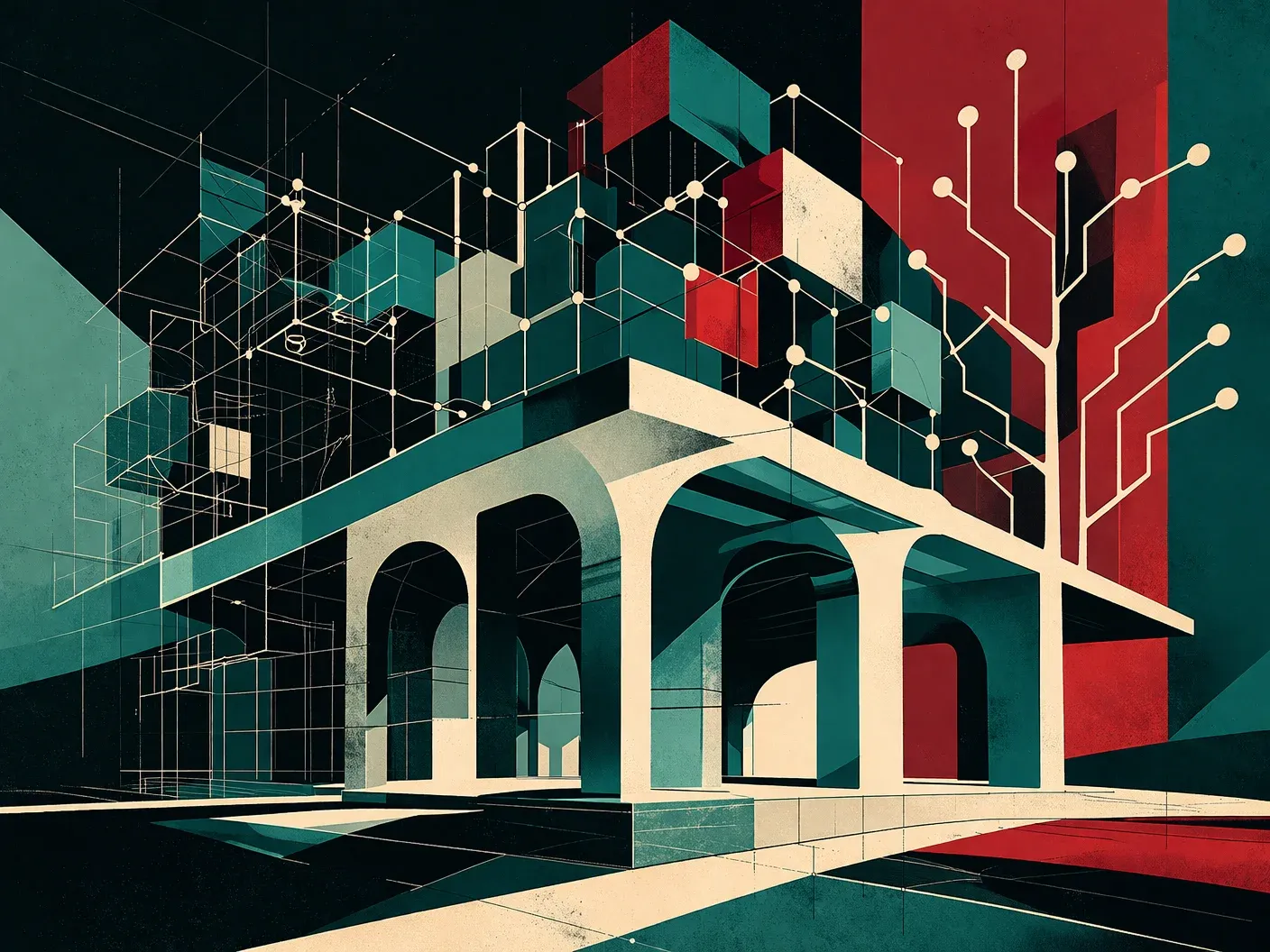
In the past, a developer was often a glorified bricklayer. Success was found in the manual labor of laying down stable, reusable bricks of code. But when AI can manufacture and lay those bricks instantly, the value of the bricklayer vanishes.
The value now lies in the Architect. This new role isn’t about writing syntax. It is about providing the three things AI cannot yet originate:
- Intent: Defining the “why.” Identifying exactly what problem needs solving and why it matters to the user.
- Direction: Steering the solution. Knowing which path to take when AI offers infinite variations and ensuring the project stays true to its goal.
- Logic: The structural “how.” Designing the underlying flow and logic that ensures separate systems work together as a cohesive whole.
The irony is that these architectural components (the soul of the software) cannot be protected by open source licenses or copyright. We are moving into an era where intent is everything, and execution is a commodity.
The value of the public domain
While the legal protection of a license is fading, the fact that code lives in the public domain matters more than ever. This vast, shared library of logic is what allows us all to develop faster. We are no longer starting from zero. We are starting from a collective baseline of human knowledge that AI has made instantly accessible.
By removing the friction of syntax and boilerplate, developers are free to have much grander ideas. We can now build complete, complex solutions much faster than we could five years ago. We are no longer limited by how many bricks we can lay in a day. We are only limited by the scale of our vision.
The “Dries” model: code as a blueprint
A perfect example of this shift comes from Dries Buytaert, the founder of Drupal. In a recent blog post, Dries discussed “Adaptable Modules.” These are site-specific pieces of code that are not meant to be installed, but rather used as a starting point for AI to reshape.
Dries is sharing his architectural choices without worrying about what he calls the “generalization tax,” which is the massive effort required to make code work for everyone. He provides the blueprint (his logic and direction) and lets AI handle the manual labor of adapting it to a specific site.
In this new world, the win is not in protecting the bricks or ensuring your name is on every derivative work. The win is in the proliferation of the solution. Dries might not even care about getting recognition when his code is repurposed, but that is a luxury of the established.
Vision is the new competitive edge
For the developer just starting out today, the landscape has shifted permanently. The protection once offered by copyright is dissolving into a sea of AI-generated syntax.
The rise of the architect means that your value no longer lives in the files you commit to GitHub. It lives in your ability to define intent, maintain direction, and master the logic of a solution.
You can no longer compete on the bricks. To survive and thrive in this new era, you have to compete on vision.
Read my next post about the generalization tax, and why I still think WordPress is a great base for AI.

Comments